It's over a year away - next summer - but I figured I'd throw this on here for those of you who are Harry Potter fans. Enjoy!

"After a hard day's work diggin' up the sod, we're ready for chow."

Wednesday, June 28, 2006


Friday, June 09, 2006
Summer Opportunity for Girls! Sorry, guys.
Dear Am. Promise team,
There is a fabulous opportunity for girls, ages 15-18, to attend a Science,Engineering, and Technology summer camp, hosted by OCC and OU. July 30 - August 5,2006. Some openings have become available for this once in a lifetime opportunity, and I know you have the girls who could benefit! Girls will be housed at dorms @ O.U., and spend each day working on a muiltiple of interesting hand-ons activities and skills, work in teams, and have mentors and coaches throughout.
Both technical and interpersonal skills will be covered in a multiple of workshops and activities. This is sponsored by the Society of Manufacturing Engineering,OCC, OU, and Oakland Schools, and will only cost $50!
Please send your interest inquiry to Marikay Clancey, at OCC, 248.232.4210, mlclanc2@oaklandcc.edu.
I put the application on the Excel website at my address: http://www.birmingham.k12.mi.us/Schools/High+Schools/Groves/Social+Studies/gw02bps/Excel+10.htm
Good luck, and have a great summer, everybody.
There is a fabulous opportunity for girls, ages 15-18, to attend a Science,Engineering, and Technology summer camp, hosted by OCC and OU. July 30 - August 5,2006. Some openings have become available for this once in a lifetime opportunity, and I know you have the girls who could benefit! Girls will be housed at dorms @ O.U., and spend each day working on a muiltiple of interesting hand-ons activities and skills, work in teams, and have mentors and coaches throughout.
Both technical and interpersonal skills will be covered in a multiple of workshops and activities. This is sponsored by the Society of Manufacturing Engineering,OCC, OU, and Oakland Schools, and will only cost $50!
Please send your interest inquiry to Marikay Clancey, at OCC, 248.232.4210, mlclanc2@oaklandcc.edu.
I put the application on the Excel website at my address: http://www.birmingham.k12.mi.us/Schools/High+Schools/Groves/Social+Studies/gw02bps/Excel+10.htm
Good luck, and have a great summer, everybody.
Thursday, June 01, 2006
The National Debt
It's at $8.4 trillion and counting. All of it is owed to the American public. The question is, who will have to repay it and how much will it cost?
Visit the U.S. National Debt Clock
Visit the U.S. National Debt Clock
Friday, May 26, 2006
Matt's Thoughts on Abortion - Roe vs. Wade
So, today we talked about woman's rights and the topic of abortion came up. Many people have different views about what exactly is right and what is wrong. Me personally, I believe that if the woman is either too young, too poor and can't raise a child, or for some good reason can't have the baby, they can get an abortion within the first 2 months while the fetus hasn't developed yet or really is a "baby". This, in my mind would be much better than having a baby being born from someone under 18 with no help and having a kid try to grow up in such bad conditions. But that's just me.
What are your thoughts on the topic?
First off are u for or against abortions?
If yes when is it right to have them and under what conditions?
If not what are your reasonings?
What are your thoughts on the topic?
First off are u for or against abortions?
If yes when is it right to have them and under what conditions?
If not what are your reasonings?
Who stays at home? Mom or Dad?
 Mike asks,
How come the men in today's time are supposed to be the ones to bring home the money and support the family? It is very stereotypical that the men go to work in the morning and come home late and do the same thing day after day while the woman stays home and raises the family. How come it can't flip flop? Would America change?
I think that the woman could go work and the guy could stay home or the other way around. I don't really care at all. But, I believe that the woman should still help support the family instead of raising it. Plus, the kids could be raised with a little manhood instead of all womanhood during the day. I'm not trying to be sexist at all but I know a few guys are thinking the same thing. What do you think?
Editor's note: For a contextual frame of reference, we were talking about the women's movement in class this week and discussed women's changing roles in both the house and the workplace.
Thursday, May 25, 2006
What did the President know and when did he know it?
When we were watching the Nixon video on Watergate, I was wondering, do you think Nixon really did it? The problem is, is that there is enough evidence for both yes and no (even though to me Nixon knew).
For yes, you could say that the “plumbers” were sent by Nixon’s administration, how could he have no known?
For no, Nixon’s campaign people could have taken a step further than Nixon wanted and acted without his knowledge. What do you think? Do you think Nixon knew what was going on or that he had no idea?
Dan
For yes, you could say that the “plumbers” were sent by Nixon’s administration, how could he have no known?
For no, Nixon’s campaign people could have taken a step further than Nixon wanted and acted without his knowledge. What do you think? Do you think Nixon knew what was going on or that he had no idea?
Dan
Wednesday, May 24, 2006
"When the President does it, that means it's not illegal"
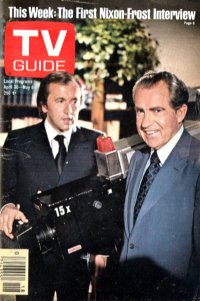
"When the President does it, that means it's not illegal. If the President approves something because of a threat to internal peace and order, of significant magnitude, then the President's decision, in that instance...enables those who carry [the President's order] out to carry it out without violating the law. " - Richard M. Nixon
During all of the Vietnam protests, President Nixon became convinced that there was a foreign power/country/enterprise directing these American kids, so he wanted to find out who and how these directives were getting done. He signed an Executive Order that allowed the intelligence agencies to spy on Americans in the hopes of finding that foreign element that funded subversive groups that were planning protests and other crazy things. The FBI could tap more phones, open mail, and break into homes and offices w/o warrants. These powers were later curtailed by Congress in the mid 70s, but then expanded again recently in the name of securing the nation from another terrorist attack called the Patriot Act.
"Did Erlichmann inform me that these two men were going to California? He may well have. And if he had, I would have said, 'Go right ahead'." - Nixon, in reference to Gordon Liddy and Howard Hunt going to California to break into Daniel Ellsberg's psychiatrist's office.
So, give me your comments on Nixon's statements.
Or, comment on any similarities to today's events in the war on terror.
Check out this website on Watergate: http://watergate.info/
Mr. W.
Sunday, May 21, 2006
Nixon's "Myths of Vietnam"

You've recently read or heard summaries of the first chapter from former President Nixon's book, No More Vietnams. The title of the chapter was entitled "The Myths of Vietnam" and in it he presents the four defining myths of the war. My questions for you are as follows:
1. Do you agree with President Nixon that a foreign policy with the "willingness to use power to defend national interests" is something for which the U.S. should strive? Why or why not? In other words, Nixon feels that the U.S. should be willing to use its armed forces when necessary instead of just relying on sanctions, diplomacy, the United Nations, etc.
2. Nixon said, "In the end, Vietnam was lost on the political front in the U.S., not on the battlefront in Southeast Asia." Give at least one example from what we've studied that can prove this statement false, and then provide another statement that can show how Nixon's assertion is true.
3. Under "Myth #2: The Vietnam War was unwinnable", Nixon states that "when we signed the Paris Peace agreements in 1973, we had won the war. We then proceeded to lose the peace." He blames Congress for not providing enough military aid to support the South Vietnamese government after the U.S. military had left in January 1973. His rationale was that the Soviet Union was supporting North Vietnam, we should support South Vietnam even if we're not fighting the war. Please comment on his initial statement about winning the war (keeping in mind the original reasons why we were there in the first place), and then tell me if Congress did the right thing by cutting off aid to SV between 1973 and 1975 when South Vietnam fell (remembering the details from chaos that ensued and mentioned in this chapter).
Pick two of these questions to answer in thoughtful paragraphs using examples from your notes, videos, and readings.
Tuesday, May 16, 2006
Returning Vietnam Vets
In class recently we have been discussing the veterans of the Vietnam War. One thing I learned was that when they came home, some Americans were extremely crude to the soldiers, few would even spit on them. Personally, I think that's disgusting and completely inappropriate. Just because you might have disagreed with the war does not give you privileges to disrespect your fellow Americans.
We also learned about the effects that the war left on these soldiers such as Post Traumatic Stress Disorder and shell shock. I wonder what I would have done if someone I loved left for the war and came back a completely different person.
What are your thoughts?
-How would you react?
-How would you help them deal with something that nobody else can really understand?
-How would you have dealt with the veterans if you disagreed with them going there?
Maddie
We also learned about the effects that the war left on these soldiers such as Post Traumatic Stress Disorder and shell shock. I wonder what I would have done if someone I loved left for the war and came back a completely different person.
What are your thoughts?
-How would you react?
-How would you help them deal with something that nobody else can really understand?
-How would you have dealt with the veterans if you disagreed with them going there?
Maddie
Emily on If I Die in a Combat Zone
So we got a new book to read last week, for those of you who haven't noticed, and to me I think that it is a REALLY bad book. I know, we haven't gotten far in the book yet, so it may get better, but just from reading the first few chapters, it is really confusing.
It's confusing because all it is is these soliders in battle thoughout the Vietnam war. It also is kind of disturbing. It gives off the f- bomb a lot which is totally uncalled for and it also has some really nasty images. I know that it is a book about the war, and it's supposed to be all bloody and nasty, but I think it overdoes it. It's just another book about some soldiers and their journey thoughout a war.
So as you can see, I don't find this book very exciting. So I want to know if anyone agrees with me, or if i'm thinking about it way too much.
Thanks, Emily
It's confusing because all it is is these soliders in battle thoughout the Vietnam war. It also is kind of disturbing. It gives off the f- bomb a lot which is totally uncalled for and it also has some really nasty images. I know that it is a book about the war, and it's supposed to be all bloody and nasty, but I think it overdoes it. It's just another book about some soldiers and their journey thoughout a war.
So as you can see, I don't find this book very exciting. So I want to know if anyone agrees with me, or if i'm thinking about it way too much.
Thanks, Emily
Friday, May 12, 2006
Was it all about RUBBER?
This week we talked about the war in Vietnam. We talked about it's parralellism to the Revolutionary war, and how they had communist aid. We talked about how even with a 10:1 death ratio in our favor, the VC still thought they were winners. But I don't care about any of that, I don't even get why we were there in the first place.

What does Vietnam have that we need? Rubber? If you can get a car to run on Rubber then by all means take over Vietnam, but CARS don't run on rubber!!! All those who agree with me, good job, and all those who disagree...I don't like you.
 Alex S.

What does Vietnam have that we need? Rubber? If you can get a car to run on Rubber then by all means take over Vietnam, but CARS don't run on rubber!!! All those who agree with me, good job, and all those who disagree...I don't like you.
 Alex S.
Maggie on the Draft

Today in class we talked about the draft and what we would do if we were in it at that time. Everyone brought up valid points, but I think that I would probably run away. I have my whole life to live, and I wouldn't want to compromise it for a war without a real point. I do think that I would be a protester of the [Vietnam] war because I don't believe in it and I think I would feel the same way then too. What do you guys think?
So my questions are;
1. What would you do about the draft?
2. Do you think that you would be one of the people protesting at the colleges even though it could be dangerous when the National Guard comes in?
-Maggie
Monday, May 01, 2006
Holden Caulfield vs. Forrest Gump

Holden Caulfield v. Forrest Gump
This week when we watched Forrest Gump, I noticed that Forrest pretty much just went with the flow. He always just did what he was told and luck came to him. Then, when I thought about Holden Caulfield in Catcher in the Rye, it seemed as if they were total opposites. Holden was a rebel and really didn't have any luck. His family was messed up, he always got kicked out of school, and he somehow always managed to get himself into a fight. However, in the end of Catcher, Holden finds his 'happy place' with his sister when he sits in the rain watching his sister on the carousel. Forrest also finds his 'happy place' when he lets Forrest Jr. off to school for the first time. I found it ironic that both of them only felt complete when they went against how they had acted all other times. Like everyone expected Forrest to be immature so he never was faced with mature decisions, but he finally grew up when he let his son go off to school. And with Holden he was always expected to be mature because he was always sent off to boarding school but when he finally let himself go and was able to be a kid for once he found himself happy. Do you guys thing they're more alike or more opposite?
-Madi
Sunday, April 30, 2006
What would you do?

AJ asks,
In class the other day we watched a video on the civil rights movement in Birmingham, Alabama. This was unlike other videos in which it didn't give most of the praise to Martin Luther King Jr. but intsead to the children of Birmingham. It showed D-Day in which all the students left school and went on a march to the 16th Street Baptist Church. They continued to go back and do civil marches and cause interruption in the white streets. They eventually had dogs and fire hoses sprayed at them yet they continued to go back.
My question to the class is that if you were a black teenager in this time period living in Birmingham, Alabama would you have participated in these stands and marches against the white police? Would you have risked getting kicked out of school, getting in trouble with your parents and going to jail? Would you have been brave enough to stand in there when dogs are being brought in and the hoses are being brought out?
Wednesday, April 12, 2006
Stuff over break
Couple of things to do over break:
1. Kennedy blog - after doing the "Several Ways to Look at JFK" exercise (based on the book, Forty Ways to Look at JFK by Gretchen Rubin), complete the blog by answering the 2 questions. Due April 27.
2. Read Ch. 1 -5 in The Secret Life of Bees.
3. Extra Credit: Watch The Armenian Genocide, a PBS documentary, on Monday, April 17 at 10 p.m. (and at 3:30 a.m.).
- minimum 1 page summary of the show
- minimum 1 page make connections to Darfur, Night, Rwanda
20 pts. max.
Due April 29.
1. Kennedy blog - after doing the "Several Ways to Look at JFK" exercise (based on the book, Forty Ways to Look at JFK by Gretchen Rubin), complete the blog by answering the 2 questions. Due April 27.
2. Read Ch. 1 -5 in The Secret Life of Bees.
3. Extra Credit: Watch The Armenian Genocide, a PBS documentary, on Monday, April 17 at 10 p.m. (and at 3:30 a.m.).
- minimum 1 page summary of the show
- minimum 1 page make connections to Darfur, Night, Rwanda
20 pts. max.
Due April 29.
Tuesday, April 11, 2006
Men - bashing? Nick doesn't think so.
I’ve been thinking about the whole “how men are portrayed in the media” thing, and I don’t think that men are portrayed as bad as a lot of people think. Even though there is still that “tough guy” image that is seen in almost every movie and on many TV shows, there are plenty of regular men in the media as well. For example, even though real, masculine men aren’t supposed to cook, one of my favorite TV shows is Iron Chef—a show in which top chefs (usually men) duke it out in a kitchen, trying to defeat an Iron Chef. Also, Emeril is pretty popular (although I don’t watch him myself), and isn’t considered to be any less of a man because of his mad cooking skills.

Next, that guy on Extreme Home Makeover cries almost every show but is still respected by many people and is considered more of a man because of the things he does to help people.
There’s lots more examples of these media men who don’t fit the masculine figure that we talked about in class, but I think that there should be more so that the view of men in the media can change and young boys have more to look up to than just tough guys.

Next, that guy on Extreme Home Makeover cries almost every show but is still respected by many people and is considered more of a man because of the things he does to help people.
There’s lots more examples of these media men who don’t fit the masculine figure that we talked about in class, but I think that there should be more so that the view of men in the media can change and young boys have more to look up to than just tough guys.
Catcher isn't all that

The book, The Catcher in the Rye, to me wasn’t that good of a book. I felt like all Holden did was explain and show how depressed he was. I think the biggest part of his depressed state was not only that Allie died, but so did his childhood. Through out the book you can tell his desperate acts of childhood. But as the book went on in Holden’s life it reveals that he actually started to get better and realized everyone has to grow up. Despite the fact that in the end Holden gets better, the book it self to me was boring. If I wanted to see or hear about depressed people I can just walk around in Groves. So then here are some questions I was wondering.
How did you feel about the book? Good or Bad?
Did you think the book was interesting or boring? Why?
Thursday, March 30, 2006
Doug's questions about the Zapruder tape
All right, today we learned about the Zapruder Film in class and it was highly controversial. We all learned about how he was filming JFK as he was riding down a street in Texas. He also got on the tape the assassination of JFK. We were undecided today in class whether or not the film should have been distributed so that the American people could view it. I personally think that it should have never been shown to anyone other than the police force looking into his death. Why would the American people want to watch as their president’s brains got blown out? So I ask you:
1. Was it a violation of the Kennedy’s privacy? Would his wife and children want to watch it and would they want other people to see it?
2. Was it right of the Zapruder family to sell copies to a television company, in exchange of lots of money, who showed it on air?
3. If you were in Zapruder’s shoes would you keep the tape and just show the FBI or would you unleash it to the public? Why?
A link to the history of the Zapruder film: http://www.jfk.org/Research/Zapruder/Zapruder_Film_Chrono.htm
The film ownership still resides within the National Archives but the Zapruder family was compensated with $16 million dollars by the gov't. for the confiscation of the film.
1. Was it a violation of the Kennedy’s privacy? Would his wife and children want to watch it and would they want other people to see it?
2. Was it right of the Zapruder family to sell copies to a television company, in exchange of lots of money, who showed it on air?
3. If you were in Zapruder’s shoes would you keep the tape and just show the FBI or would you unleash it to the public? Why?
A link to the history of the Zapruder film: http://www.jfk.org/Research/Zapruder/Zapruder_Film_Chrono.htm
The film ownership still resides within the National Archives but the Zapruder family was compensated with $16 million dollars by the gov't. for the confiscation of the film.
Zapruder film: historical artifact, exploitation, or private moment?
In my opinion, I think that the JFK assasination tape should be sold because he was our President and it affects the people as well as his family. Part of becoming the president is dealing with all the public attention and when something happens of course the public is going to find out and want to know what happened. For example the press and people were in Clinton's business when he supposidly cheated with Monica. In my opinion, I think that it should be shared with the people because he was our president. What do you think about it?
Bob
Editor's Note: This is in regards to our conversation about the Abraham Zapruder film, the infamous JFK assassination video tape that has been available for purchase since 1998.
Bob
Editor's Note: This is in regards to our conversation about the Abraham Zapruder film, the infamous JFK assassination video tape that has been available for purchase since 1998.
Wednesday, March 29, 2006
Different Views of President Kennedy
After reading and listening to the different views of President Kennedy's life as seen through different biographers' eyes, it's time for your opinion/assessment.
John Kennedy's biographers are usually broken into two groups: one group works to reinforce the image of Kennedy as icon, as the ideal president. They tend to gloss over the difficult stuff in his life with the idea that it's not important to know that kind of info about him. These biographers also stress his good qualities and downplay his bad qualities.
The second group of biographers are iconoclasts; they are trying to poke holes in the JFK myth by finding evidence to refute many of the cherished (and false) stories about the Kennedy family, clan, and presidency. These biographers are like realist authors - they give you the gritty details of a person's life; the fact that this person was the president doesn't seem to phase them.
The American people have consistently voted JFK (along with Lincoln) as their greatest American President, yet historians have given him the title "Most Overrated" in American Heritage magazine. When looking at his Congressional record, he didn't do much. Almost the same thing can be said for his Presidential record; how significant were the Peace Corps and the race to the moon in the long run?
Your job: answer the following questions
1. Share your assessment of the man and his job as president. Explain your reasoning.
2. Where should biographers draw the line on their subjects? How much is too much and how little is too little? It really boils down to what the main job of a biographer is.
http://www.maryferrell.org/wiki/index.php/Main_Page Great link to a tribute website to a JFK archivist, Mary Ferrell.
John Kennedy's biographers are usually broken into two groups: one group works to reinforce the image of Kennedy as icon, as the ideal president. They tend to gloss over the difficult stuff in his life with the idea that it's not important to know that kind of info about him. These biographers also stress his good qualities and downplay his bad qualities.
The second group of biographers are iconoclasts; they are trying to poke holes in the JFK myth by finding evidence to refute many of the cherished (and false) stories about the Kennedy family, clan, and presidency. These biographers are like realist authors - they give you the gritty details of a person's life; the fact that this person was the president doesn't seem to phase them.
The American people have consistently voted JFK (along with Lincoln) as their greatest American President, yet historians have given him the title "Most Overrated" in American Heritage magazine. When looking at his Congressional record, he didn't do much. Almost the same thing can be said for his Presidential record; how significant were the Peace Corps and the race to the moon in the long run?
Your job: answer the following questions
1. Share your assessment of the man and his job as president. Explain your reasoning.
2. Where should biographers draw the line on their subjects? How much is too much and how little is too little? It really boils down to what the main job of a biographer is.
http://www.maryferrell.org/wiki/index.php/Main_Page Great link to a tribute website to a JFK archivist, Mary Ferrell.
Subscribe to:
Posts (Atom)