"After a hard day's work diggin' up the sod, we're ready for chow."

Welcome to our class's blog. We are discussing the latest topics we're studying in American history and literature. This website has been active since December 2005. Selected Excel 10 students will take turns posting their thoughts, and other Excel 10 students will comment on these posts. Parents, staff, and other interested persons are invited to add their comments on our musings. Any inappropriate comments will be deleted.

Sunday, April 30, 2006

What would you do?


AJ asks,

In class the other day we watched a video on the civil rights movement in Birmingham, Alabama. This was unlike other videos in which it didn't give most of the praise to Martin Luther King Jr. but intsead to the children of Birmingham. It showed D-Day in which all the students left school and went on a march to the 16th Street Baptist Church. They continued to go back and do civil marches and cause interruption in the white streets. They eventually had dogs and fire hoses sprayed at them yet they continued to go back.

My question to the class is that if you were a black teenager in this time period living in Birmingham, Alabama would you have participated in these stands and marches against the white police? Would you have risked getting kicked out of school, getting in trouble with your parents and going to jail? Would you have been brave enough to stand in there when dogs are being brought in and the hoses are being brought out?

Wednesday, April 12, 2006

Stuff over break

Couple of things to do over break:
1. Kennedy blog - after doing the "Several Ways to Look at JFK" exercise (based on the book, Forty Ways to Look at JFK by Gretchen Rubin), complete the blog by answering the 2 questions. Due April 27.

2. Read Ch. 1 -5 in The Secret Life of Bees.

3. Extra Credit: Watch The Armenian Genocide, a PBS documentary, on Monday, April 17 at 10 p.m. (and at 3:30 a.m.).
- minimum 1 page summary of the show
- minimum 1 page make connections to Darfur, Night, Rwanda
20 pts. max.

Due April 29.

Tuesday, April 11, 2006

Men - bashing? Nick doesn't think so.

I’ve been thinking about the whole “how men are portrayed in the media” thing, and I don’t think that men are portrayed as bad as a lot of people think. Even though there is still that “tough guy” image that is seen in almost every movie and on many TV shows, there are plenty of regular men in the media as well. For example, even though real, masculine men aren’t supposed to cook, one of my favorite TV shows is Iron Chef—a show in which top chefs (usually men) duke it out in a kitchen, trying to defeat an Iron Chef. Also, Emeril is pretty popular (although I don’t watch him myself), and isn’t considered to be any less of a man because of his mad cooking skills.

Next, that guy on Extreme Home Makeover cries almost every show but is still respected by many people and is considered more of a man because of the things he does to help people.

There’s lots more examples of these media men who don’t fit the masculine figure that we talked about in class, but I think that there should be more so that the view of men in the media can change and young boys have more to look up to than just tough guys.

Catcher isn't all that


The book, The Catcher in the Rye, to me wasn’t that good of a book. I felt like all Holden did was explain and show how depressed he was. I think the biggest part of his depressed state was not only that Allie died, but so did his childhood. Through out the book you can tell his desperate acts of childhood. But as the book went on in Holden’s life it reveals that he actually started to get better and realized everyone has to grow up. Despite the fact that in the end Holden gets better, the book it self to me was boring. If I wanted to see or hear about depressed people I can just walk around in Groves. So then here are some questions I was wondering.

How did you feel about the book? Good or Bad?

Did you think the book was interesting or boring? Why?

Thursday, March 30, 2006

Doug's questions about the Zapruder tape

All right, today we learned about the Zapruder Film in class and it was highly controversial. We all learned about how he was filming JFK as he was riding down a street in Texas. He also got on the tape the assassination of JFK. We were undecided today in class whether or not the film should have been distributed so that the American people could view it. I personally think that it should have never been shown to anyone other than the police force looking into his death. Why would the American people want to watch as their president’s brains got blown out? So I ask you:
1. Was it a violation of the Kennedy’s privacy? Would his wife and children want to watch it and would they want other people to see it?
2. Was it right of the Zapruder family to sell copies to a television company, in exchange of lots of money, who showed it on air?
3. If you were in Zapruder’s shoes would you keep the tape and just show the FBI or would you unleash it to the public? Why?

A link to the history of the Zapruder film: http://www.jfk.org/Research/Zapruder/Zapruder_Film_Chrono.htm
The film ownership still resides within the National Archives but the Zapruder family was compensated with $16 million dollars by the gov't. for the confiscation of the film.

Zapruder film: historical artifact, exploitation, or private moment?

In my opinion, I think that the JFK assasination tape should be sold because he was our President and it affects the people as well as his family. Part of becoming the president is dealing with all the public attention and when something happens of course the public is going to find out and want to know what happened. For example the press and people were in Clinton's business when he supposidly cheated with Monica. In my opinion, I think that it should be shared with the people because he was our president. What do you think about it?

Bob

Editor's Note: This is in regards to our conversation about the Abraham Zapruder film, the infamous JFK assassination video tape that has been available for purchase since 1998.

Wednesday, March 29, 2006

Different Views of President Kennedy

After reading and listening to the different views of President Kennedy's life as seen through different biographers' eyes, it's time for your opinion/assessment.

John Kennedy's biographers are usually broken into two groups: one group works to reinforce the image of Kennedy as icon, as the ideal president. They tend to gloss over the difficult stuff in his life with the idea that it's not important to know that kind of info about him. These biographers also stress his good qualities and downplay his bad qualities.

The second group of biographers are iconoclasts; they are trying to poke holes in the JFK myth by finding evidence to refute many of the cherished (and false) stories about the Kennedy family, clan, and presidency. These biographers are like realist authors - they give you the gritty details of a person's life; the fact that this person was the president doesn't seem to phase them.

The American people have consistently voted JFK (along with Lincoln) as their greatest American President, yet historians have given him the title "Most Overrated" in American Heritage magazine. When looking at his Congressional record, he didn't do much. Almost the same thing can be said for his Presidential record; how significant were the Peace Corps and the race to the moon in the long run?

Your job: answer the following questions

1. Share your assessment of the man and his job as president. Explain your reasoning.
2. Where should biographers draw the line on their subjects? How much is too much and how little is too little? It really boils down to what the main job of a biographer is.

http://www.maryferrell.org/wiki/index.php/Main_Page Great link to a tribute website to a JFK archivist, Mary Ferrell.

Tuesday, March 28, 2006

Invasion of Privacy? Not Really.

So last week we had a good point come up in class.
Are our teachers and school board becoming too involved in our after school activities and hang outs? By this I mean having meetings during x-block and such and showing to the rest of the teachers students MySpace and Face-Book pages at our school. From here they show some of the somewhat innapropriate pictures or links kids may have on there website. From here they contact the student and he or she must pay certain concequences. What do others think about this?
Should teachers be spying on kids to see what information they choose to display? I mean what there basically doing is just searching to get kids into trouble. This also relates with Bush and his recent wiretaps and the invasion of our privacy of the people. The Fourth Amendment declares that the "right of the people to be secure in their persons, houses, papers and effects against unreasonable searches and seizures shall not be violated and no warrants shall issue, but upon probable cause, supported by oath or affirmation, and particularly describing the place to be searched, and the persons or things to be seized." I believe that even in a time when terrorists are at bay, Bush has no right to invade our privacy and tap phone lines, read your messages, or doing anything without a warrant or evidence to search threw your belongings. What do others feel about this and is our school doing somewhat the same?

~ Q

Editorial Reply: After consulting with administration, I wanted to make sure this post got put on the website to clear up some misconceptions about MySpace and Face-Book and the staff's alleged involvement. No one at Groves High School or in the district is searching these or any other similar kinds of websites to entrap kids using their own words and pictures. Some of the teachers and administrators were made aware of issues concerning MySpace and Face-Book when we read a few articles about some of the privacy issues and ramifications of posting private material in public spaces.

Here's one from USA Today, March 8, 2006.
http://www.usatoday.com/tech/news/internetprivacy/2006-03-08-facebook-myspace_x.htm?POE=click-refer
Here's another one from the Free Press:
http://www.freep.com/apps/pbcs.dll/article?AID=/20060306/NEWS05/603060326&template=printart

Teachers were made aware of these sites; they were not shown Groves' students sites, to the best of my knowledge. This is a raising awareness issue, not just for teachers, but for parents as well. Truthfully, we've got too much to do to be wasting our time trying to catch students online doing things they shouldn't be doing. It's my sincere hope that my students aren't doing anything they shouldn't. But it's their parents' job to keep an eye on them outside of school, not mine.

Sunday, March 26, 2006

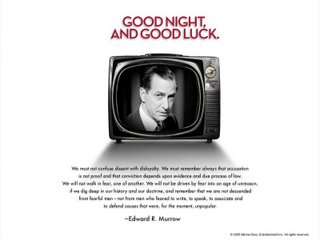
Thoughts on "Good Night and Good Luck"


Good Night, And Good Luck was not at all what I was expecting. Being an Oscar nominee, I thought it was going to be really good and interesting, but it's not the kind of movie that explains events that may be unfamiliar to some people. Towards the end, I was finally getting the idea of the whole movie and then it just ended. To really understand it, I think I would have to watch it again or maybe even two more times- not something I want to do. Another thing I didn't like about it was that it was black and white. I know they were just trying to make it look older so that people could get the feel of it, but for me, black and white movies are too distracting and take away from actually watching the movie. Color would have been much better.
Anyone agree or disagree?

~deenagh

Saturday, March 25, 2006

Changing Ideas about the Hiroshima


Atomic Bomb

We have gone over many times in class the atomic bomb. In the beginning I thought it was a good idea. I felt that we needed to get back on Japan and teach them a lesson. However, after reading Hiroshima my views on the atomic bomb have definitely changed. I believe that there were other ways to end the war, and taking drastic measures is not the best way to end even the harshest situations. One thing that affected my view on the bomb is that it had a long-term effect on everyone who was hit. People still had lasting effects years and years later. Whether it was physical or mental the atomic bomb never quite left each Hibakusha. I was surprised to hear that even babies that weren’t born yet came out with many disabilities.
After reading Hiroshima, what were your views of the atomic bomb?
Would you have decided to drop it?
What other options would you do instead?

Friday, March 17, 2006

Murrow's quotes applied to today?


Choose three statements – one from each speech – and discuss how each of your statements can be applied to our world and the political or social situations today.

" No one familiar with the history of this country can deny that congressional committees are useful. It is necessary to investigate before legislating, but the line between investigating and persecuting is a very fine one and the junior Senator from Wisconsin has stepped over it repeatedly. His primary achievement has been in confusing the public mind, as between the internal and the external threats of Communism. We must not confuse dissent with disloyalty. We must remember always that accusation is not proof and that conviction depends upon evidence and due process of law. We will not walk in fear, one of another. We will not be driven by fear into an age of unreason, if we dig deep in our history and our doctrine; and remember that we are not descended from fearful men. Not from men who feared to write, to speak, to associate, and to defend causes that were for the moment unpopular.

This is no time for men who oppose Senator McCarthy's methods to keep silent, or for those who approve. We can deny our heritage and our history, but we cannot escape responsibility for the result. There is no way for a citizen of a republic to abdicate his responsibilities. As a nation we have come into our full inheritance at a tender age. We proclaim ourselves, as indeed we are, the defenders of freedom, wherever it continues to exist in the world, but we cannot defend freedom abroad by deserting it at home. The actions of the junior Senator from Wisconsin have caused alarm and dismay amongst our allies abroad, and given considerable comfort to our enemies. And whose fault is that? Not really his. He didn't create this situation of fear; he merely exploited it — and rather successfully. Cassius was right. "The fault, dear Brutus, is not in our stars, but in ourselves." Good night, and good luck."

– See it Now broadcast, March 9 1954


If we confuse dissent with disloyalty — if we deny the right of the individual to be wrong, unpopular, eccentric or unorthodox — if we deny the essence of racial equality then hundreds of millions in Asia and Africa who are shopping about for a new allegiance will conclude that we are concerned to defend a myth and our present privileged status. Every act that denies or limits the freedom of the individual in this country costs us the . . . confidence of men and women who aspire to that freedom and independence of which we speak and for which our ancestors fought."

– Ford Fiftieth Anniversary Show, CBS and NBC, June
1953


“We are currently wealthy, fat, comfortable and complacent. We have currently a built-in allergy to unpleasant or disturbing information. Our mass media reflect this. But unless we get up off our fat surpluses and recognize that television in the main is being used to distract, delude, amuse and insulate us, then television and those who finance it, those who look at it and those who work at it, may see a totally different picture too late.

Our history will be what we make it. And if there are any historians about fifty or a hundred years from now, and there should be preserved the kinescopes for one week of all three networks, they will there find recorded in black and white, or color, evidence of decadence, escapism and insulation from the realities of the world in which we live. I invite your attention to the television schedules of all networks between the hours of 8 and 11 p.m., Eastern Time. Here you will find only fleeting and spasmodic reference to the fact that this nation is in mortal danger. There are, it is true, occasional informative programs presented in that intellectual ghetto on Sunday afternoons. But during the daily peak viewing periods, television in the main insulates us from the realities of the world in which we live. If this state of affairs continues, we may alter an advertising slogan to read: LOOK NOW, PAY LATER.

For surely we shall pay for using this most powerful instrument of communication to insulate the citizenry from the hard and demanding realities which must be faced if we are to survive. I mean the word survive literally. If there were to be a competition in indifference, or perhaps in insulation from reality, then Nero and his fiddle, Chamberlain and his umbrella, could not find a place on an early afternoon sustaining show. If Hollywood were to run out of Indians, the program schedules would be mangled beyond all recognition. Then some courageous soul with a small budget might be able to do a documentary telling what, in fact, we have done--and are still doing--to the Indians in this country. But that would be unpleasant. And we must at all costs shield the sensitive citizens from anything that is unpleasant.

I am entirely persuaded that the American public is more reasonable, restrained and more mature than most of our industry's program planners believe. Their fear of controversy is not warranted by the evidence. I have reason to know, as do many of you, that when the evidence on a controversial subject is fairly and calmly presented, the public recognizes it for what it is--an effort to illuminate rather than to agitate.

I do not advocate that we turn television into a 27-inch wailing wall, where longhairs constantly moan about the state of our culture and our defense. But I would just like to see it reflect occasionally the hard, unyielding realities of the world in which we live. I would like to see it done inside the existing framework, and I would like to see the doing of it redound to the credit of those who finance and program it. Measure the results by Nielsen, Trendex or Silex-it doesn't matter. The main thing is to try. The responsibility can be easily placed, in spite of all the mouthings about giving the public what it wants. It rests on big business, and on big television, and it rests at the top. Responsibility is not something that can be assigned or delegated. And it promises its own reward: good business and good television.

To those who say people wouldn't look; they wouldn't be interested; they're too complacent, indifferent and insulated, I can only reply: There is, in one reporter's opinion, considerable evidence against that contention. But even if they are right, what have they got to lose? Because if they are right, and this instrument is good for nothing but to entertain, amuse and insulate, then the tube is flickering now and we will soon see that the whole struggle is lost.
This instrument can teach, it can illuminate; yes, and it can even inspire. But it can do so only to the extent that humans are determined to use it to those ends. Otherwise it is merely wires and lights in a box. There is a great and perhaps decisive battle to be fought against ignorance, intolerance and indifference. This weapon of television could be useful.

Speech at Radio-Television News Directors Association, Chicago, October 15, 1958.

Thursday, March 16, 2006

The Legality of Wiretapping


I believe that tapping of our email and phone calls are necessary, but have gone way overboard. They most they should be able to do is have a search bar. They should just search words like; bomb, terrorist, and other terms having to do with acts of terrorism. They shouldn’t have the right to look in every single email in detail and “find” something else. Their searches need to be limited greatly. If they continue this it will become an even bigger problem, and with people talking about invasion of privacy and for just the people who don’t want the government snooping around their personal business. Listening to our calls shouldn’t happen unless the person is being suspected for something. Just peeking in on calls is wrong. They should have to have a reason or a warrant or anything that has legal permission instead of just being above the law. I think this needs to be stopped, and soon.

Do you think this is right? Or have they gone passed the line?
Is it possible to make this situation work? Or is it just not worth trying to stop them?

David

"We proclaim ourselves, as indeed we are, the defenders of freedom, wherever it continues to exist in the world, but we cannot defend freedom abroad by deserting it at home" - Edward R. Murrow

Wednesday, March 15, 2006

Thoughts on Intervention in Darfur


Hey everyone!

Recently we have been learning about Darfur. As we learned about it, it reminded me of Rwanda and the Holocaust. In these genocides, the American government (along with the UN and other countries) hasn't done anything to help until the very end. Even though Darfur hasn't asked for help doesn't mean that we shouldn't do anything anyway.

So my questions are,
1. Do you think that the government will do something about Darfur? And what?
2. What would the economic effects be, here at home along with the war in Iraq?

Leave your thoughts
Maggie

Tuesday, March 14, 2006

Questions on the Cold War?

This week in Excel, we are talking a lot about the Cold War and the arms race. First of all, I think this is the stupidest war ever, it shouldn't even be considered a war. There is no actual fighting going on, its all about whos got better stuff. It's very childish, what is the point of building all these nuclear weapons, other than pure intimidation. I think that the United States should have dropped a couple of its bombs on Russia, that would have spiced things up a bit...but otherwise, it's a pretty boring "war". I also think that Russia is just a bunch of copy cats. Couldn't they think of something a little more original instead of copying the Atomic bomb and the Hydrogen bomb? Bunch of wusses if you ask me... And I figure since other people ask questions in these posts, I should probably do a couple myself.

1. What do you think of the idea of dropping some bombs on Russia?
2. Do you think that the world needed the Hydrogen bomb, OR the Atomic bomb?
And Finally
3. Do you think that the Cold War should have even been considered a war?

Fish

Monday, March 13, 2006

Darfur Awareness Day


As a connection with the book, Night, that we read earlier this semester, we participated in our school's Darfur Awareness Day. The students worked together in pairs or in 3s to educate the students at Groves during a 45 minute session in between shortened 1st and 2nd hours. The session consisted of a 7 minute video from the U.S. Holocaust Memorial Center on Darfur, Sudan and the genocide going on there. Then the Excel guys and gals provided the students with more info and led them through an activity used to test their hidden biases. It was hoped that by being aware of our own hidden biases, we might be able to understand ourselves a little better. Also, we can challenge our government to step up to the plate and get involved in stopping the genocide - if we realize what's holding us back from helping the Sudanese, maybe we can channel our energy in a more positive direction.

Recently, the U.S. Senate unanimously agreed that President Bush should act immediately to stop the genocide going on in Darfur. http://www.cnn.com/2006/WORLD/africa/03/03/sudan.congress.reut/index.html?section=cnn_latest And in late February, President Bush stated that the U.S. and its allies need to take on a larger role for Darfur and hopefully end the genocide. He felt that the U.N. forces needed to be doubled and that a NATO force should also be deployed.
http://www.twincities.com/mld/miamiherald/news/world/13902286.htm?source=rss&channel=miamiherald_world

Places where you can speak out and make a difference are:
www.millionvoicesfordarfur.org and www.genocideintervention.net
Thanks.

Geoff Wickersham

Sunday, March 12, 2006

What rights would you give up?

We all know of the right to assembly, the freedom of press, and freedom of speech. These are some of the rights we are all born with. But let's say that the United States suddenly becomes this strange form of government and we all had to give up two rights. What would you give up? I would give up the right to bear arms and not letting soldiers stay in my house. I would give up the right to bear arms because guns don't solve anything. Also, if no one had guns, I think the crime rates would go down too. I would give up the right to not let soldiers stay in our homes because I think we need to be more friendly and helpful. If the soldier doesn't have a place to stay, it is our duty as Americans to help one another out. So now I pose the question to you. What rights would you give up?

Mike

Editor's note: Mike's post is in response to a discussion we had comparing the McCarthy era and its hunt for Communists to today's post-9/11/01 era of heightened security, Patriot Acts, and Presidential wiretaps. I posed the same question to them, and Mike's put a little twist on it.

Also, congrats to the Groves' Boys Team for Three-peating this Saturday. Mike, AJ, Q, Alex, way to go, guys! http://www.detnews.com/apps/pbcs.dll/article?AID=/20060312/SPORTS05/603120328/1049

Sunday, March 05, 2006

Hiroshima? Revenge?


Hey Excel... and happy birthday, Hannah, i'm one day older than you (my birthday was yesturday)!
Anyway...this week in class we watched the video Hiroshima and i'm going to post my reflections on it.
When the Japanese bombed us at Pearl Harbor, it was tragic and a lot of people died in terrible ways, so then we decide it time for revenge and we started making this humongous atomic bomb (actually 2 humongous bombs) which contains chemicals that burn into your skin. We dropped the first bomb in Hiroshima, and as we saw in the video this lady got her one leg burned off with the contaminated "rain drops," and people were burning everywhere. The US had so much hatred towards the Japanese that they did not realize that they were doing the same thing that the Japanese did to us but worse. The men in the US navy were talking about how they wanted to wipe out all of the Japanese. And the guy who was on the plane when the bomb was dropped said that he took a nap and had a sandwich afterwards, he was acting as if he just saved thousands of people insted of suffering them to death. I understand that they are so mad about Pearl Harbor and the deaths of so many Americans, but did the revenge have to be this bad? Do you think its human to kill all these people in this terrible way...and be happy about it?

neha

Monday, February 27, 2006

Your thoughts on Axis and Allies?


Hey Excel! Here are my thoughts about the game "Axis and Allies." I really liked how we got to take a break from the norm, and play a game! at first i tought it was going to be a fun quick game.. SOOO WRONG! on the box it said it was for ages 8+!!! if i was playing this and i was 8, i would kill myself! i am still confused! I think if we play it a second time it will be easier. Even though i cuoldnt tell you the first thing about how to play this game, i still learned some stuff. I learned that there is a lot of stratagie involved in war.. even if it is just a game. If you make one little mistake, that can open the playing field for many attacks! I also learned that the BRITISH KICKED BUTT!

Aside from that...here is my question. What courntry do you think played the best and should be crowned the winner of the game? You cant say your country unless you REALLy think they played better then everyone else. I am putting my chips on the Soviet Union because they played very smart and with a great deal of intellegence.

Much love for EXCEL 10 '05/'06,

Thursday, February 16, 2006

Joslyn on Being Black in America Back in the Day

Thoughts on Black Boy

On page 313, Wright talks about how he feels being black in the society
he is living in. It explains how blacks and whites, although have
different skin color, still have the same dreams, same thoughts, same
hopes and goals. He says that just because he his black, he has to hold
back his dreams, and hopes for something better. He says," Like any
other American, I dreamed of going to business and making money; I
dreamed of working for a firm that would allow me to advance until I
reached an important position;....Yet I knew-with the part of my mind
that whites had given me-that none of my dreams were possible."

When reading that, I had to stop for a second and try to imagine what he was
trying to say. I came to a final thought that made me upset, that just
because he was a different color he had to give up everything. To have
people put down people to the point where they cannot even believe in
themselves anymore is injustice. I will never know what he had to go
through, and how hurt he was by the fact, that he felt he could never
amount up to anything, but I tried to see the message he wanted to get
across, and it made me upset that people could be like that.

These are my thoughts on the topic, maybe you guys can tell me what you think?
Joslyn

Wednesday, February 15, 2006

What did FDR know? What did Bush know?

Hey Excelers...
I've got something for us to talk about.
As we enter the exciting world of World War II, there are some questions that seem to stand out to me. We threw around the thought that FDR might have known about Pearl Harbor before it happened. It is possible that he was waiting for something like this to happen for America to enter the World War. Before the date of December 7th, 1941 FDR had meetings with other Allied leaders and America was assisting them with war supplies.

We also talked about the similarities and differences to Pearl Harbor and September 11th. I have heard rumors that President Bush first found out about September 11th sometime in August. This is a similarity to Pearl Harbor, because maybe he was looking for a reason to start a war or terror. Do you think that there are other similarites and differences that maybe we missed in class? Let me know that your thinking....~Alyssa

Editor's note: President Bush received a Presidential Daily Briefing on August 6, 2001 entitled "Bin Ladin Determined to Strike in U.S." while at the Crawford ranch. He was briefed that Osama wanted to strike somewhere inside America but nothing specific was given. Bin Ladin has attempted to strike the U.S. in response to our missile attacks on his Afghani bases in 1998 (which were retaliatory strikes for two bombings of American embassies in Kenya and Tanzania). The foiled millenium bombing plot was Bin Ladin's first major attempt to strike inside the U.S.

Here's a link to the declassified PDB from 8-6-01. http://news.findlaw.com/hdocs/docs/terrorism/80601pdb.pdf
Hopefully this will dispell any rumors.